Sitrep for Nov. 19-23, 2026 (as of 8:00 UTC+3 a.m.)
Frontline Situation Update
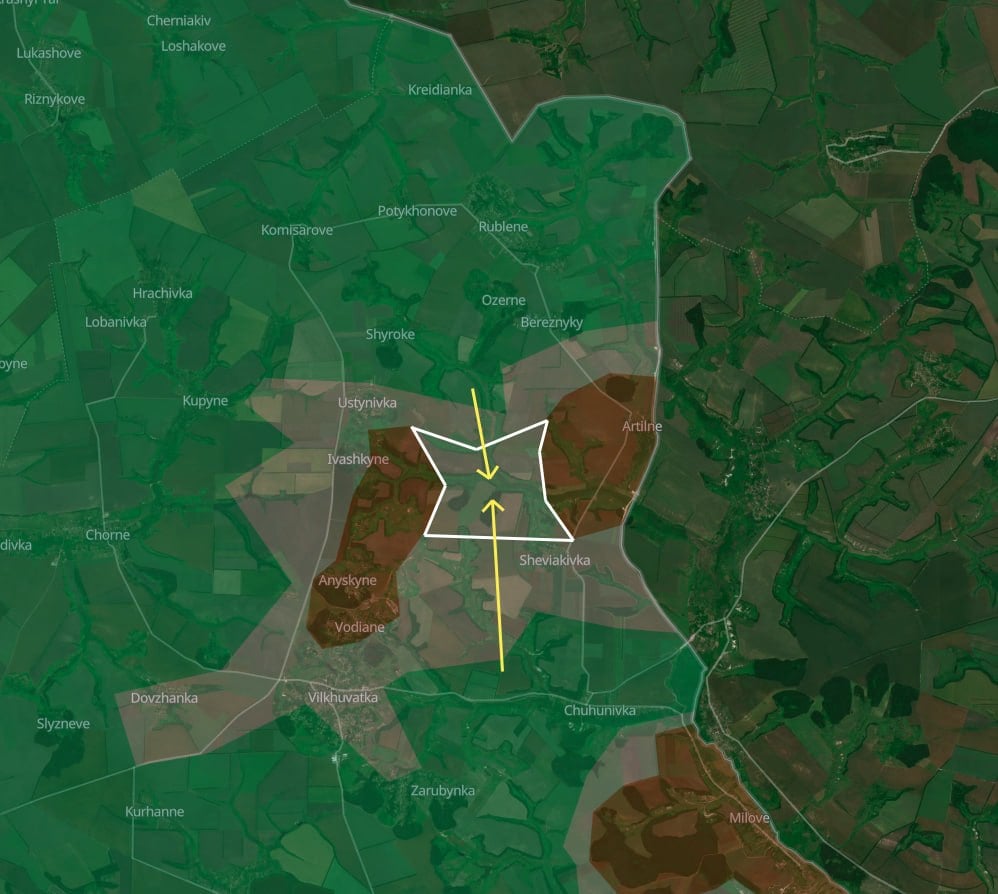
The Armed Forces of Ukraine have responded to the fictitious Operation Bear's Corner announced by the Russian General Staff in the border area of the Kharkiv region. It is worth noting that Russian forces supposedly encircled 2,000 Ukrainian soldiers and captured 461 square kilometers of territory and 28 settlements. According to reports, Ukraine's 475th Assault Regiment carried out its own operation, dubbed Bear Trap, during which it reportedly liberated 200 square kilometers of territory and 14 settlements.
This creates a peculiar situation in which the distinction between clearing and liberating territory becomes blurred. Over the preceding months, Ukrainian forces had maintained that Russian troops had not advanced as far as the village of Bilyi Kolodiaz, with only isolated infiltrations observed. This was corroborated by visual evidence showing Ukrainian troops moving freely in armored vehicles, meaning the area was neither encircled nor even part of the contested area.
In that case, it would be inaccurate to describe the Ukrainian operation as the liberation of territory. It would be more accurate to describe it as a clearing operation. Moreover, the military's statement implies that the 14 settlements had previously been captured by Russian forces, which, as far as we know, was not the case.
Analyst Playfra largely shares our assessment. According to him, the village of Vilkhuvatka can be considered part of the contested area, as the latest footage of fighting there emerged just four days ago. Clearing operations have likely been carried out in the neighboring villages of Dovzhanka and Zarubynka, although this has yet to be confirmed, as well as in several other villages in the area, where relatively few Russian assault troops were present. Playfra therefore believes that the Ukrainian military's reported success was significantly exaggerated and that the supposedly liberated villages had never actually been under Russian control.
However, according to the DeepState map, Ukrainian forces have cut off the Russian salient between the villages of Artilne and Vilkhuvatka. After we recorded our update, Playfra acknowledged that his initial assessment of the operation had been overly skeptical. As the BBC reported, the Ukrainian counteroperation began back in early September, reportedly because Ukrainian commanders considered Russian operations in the Velykyi Burluk direction to be quite dangerous.
Footage has emerged showing the use of Molniya-2 fixed-wing drones to deliver supplies to assault troops in the area of responsibility of Russia's Group of Troops "North." Instead of carrying warheads, these "disposable" drones are fitted with field rations and flown to Russian positions. Repeated deliveries to the same position result in an accumulate of discarded Molniya drones nearby, allowing Ukrainian drones to identify enemy positions.
Ukrainian and Russian Strikes
Ukrainian strikes continue along highways in the southern occupied territories. Footage has emerged showing a strike on a tractor-trailer traveling along the land bridge to Crimea—judging by the intensity of the fire, the truck may have been carrying fuel in intermediate bulk containers (IBCs), which, as we previously reported, have been used by fuel resellers.

The Wall Street Journal published an interview with Oleh Korostelyov, CEO of Ukraine's Luch Design Bureau, which manufactures the Palianytsia turbojet drone missile and the R-360 Neptune subsonic cruise missile. According to Korostelyov, annual production of Neptune missiles will reach several hundred units by the end of 2026, while annual output of the Palianytsia stands at roughly 1,000 units. These figures include missiles already expended in combat operations, including strikes on the Crimean Bridge.
The Wall Street Journal published an interview with Oleh Korostelyov, CEO of Ukraine's Luch Design Bureau, which manufactures Palianytsia and Neptune missiles. According to Korostelyov, annual production of Neptune missiles will reach several hundred units by the end of 2026, while annual output of Palianytsia missiles will be around 1,000 units. These figures include missiles already expended, including those used in strikes on the Crimean Bridge.
This information is especially important given our expectations and statements that strikes on the rail section of the Crimean Bridge will continue. They are on hold for now, partly because Russia strengthened its air defenses in the area after the successful attacks, and partly because Ukraine needs to stockpile drones and missiles to carry out truly large-scale attacks. Ukraine may need those missiles for many other military targets, including the RuAF's command posts, "drone ports," and factories. Successfully striking these targets may also require a considerable number of missiles.
The Ukrainian Telegram channel Ukraine Context, which is often described as close to Kyrylo Budanov, head of the Office of the President of Ukraine, reported, citing its own sources, that at their latest meeting, Volodymyr Zelenskyy and Defense Minister Yevhen Khmara agreed to reallocate funding from the production of FP-5 Flamingo missiles to the production of Neptune cruise missiles, which have proved more effective in recent months.
On Nov. 20, Russia struck the Puri Chveni restaurant in the center of Kryvyi Rih with ballistic missiles. After medics and first responders arrived at the strike site, Russia struck again with drones. A seven-year-old boy and a 20-year-old female ambulance paramedic sustained serious injuries and later died in the hospital. The total number of people injured rose to 73, including nine children, two police bomb technicians, two first responders from the State Emergency Service of Ukraine, and three medics.

After geolocating the impact site, we found that the Krivbasspromvodosnabzhenie [water utility] building, about 50 meters from the restaurant, could well have been the original target of the strike (hitting that building would have constituted a war crime). Nevertheless, the missiles hit the restaurant, where many civilians were gathered and a children's party was under way.

Also on Nov. 20, Russian forces struck Kyiv with ballistic missiles. They hit one of the facilities run by Kyivvodokanal, the city's water utility, killing two employees and injuring seven others. In all, the strikes killed seven people in the city and injured 17. As Michael Kofman and Rob Lee had feared, in addition to striking energy facilities, Russia is trying to disrupt the water supply to Ukraine's major cities.
On Nov. 22, observers again spotted a Saab 340 airborne early warning aircraft over Ukraine. During a Russian attack, it helped with the interception of aerial targets.

On the evening of Nov. 21, a drone threat alert was issued in Russia's Kaliningrad region. Governor Aleksey Besprozvannykh reported that the alert system had been activated in the Neman District in response to a "suspicious object from the direction of Lithuania." After checking the report, however, the authorities announced that there was no threat. This wording could be interpreted as an accusation against Vilnius, although "from the direction of Lithuania" may have referred only to the object's flight direction. Lithuania's Foreign Ministry rejected reports suggesting the country's involvement in the alleged attack.
Footage emerged that same evening showing air defense activity near Baltiysk. Tracer rounds and smoke trails resembling those left by SAM launches are visible in the sky. However, neither the sound of UAV piston engines nor the characteristic noise of a jet engine can be heard in the published footage. It is therefore impossible to determine with any confidence what specific targets the air defenses were attempting to intercept. The route the suspected aerial targets may have taken is also unclear. A direct flight from Ukraine would have required them to cross the airspace of Belarus, Poland, or Lithuania. In principle, the UAVs could have taken a considerably longer route through western Russia, the Gulf of Finland, and the Baltic Sea, approaching the Kaliningrad region from the northeast. The range of modern Ukrainian drones is sufficient for such a flight, but there is no evidence to confirm this scenario.
Earlier that morning, a Russian cargo ship, the Sparta II, sailing from Saint Petersburg to the Kaliningrad region, was attacked in the Gulf of Finland. A fire broke out aboard the vessel. Russian authorities initially claimed that no evacuation was necessary. However, Finland's Border Guard later reported that all 16 crew members had been transferred to another Russian vessel. According to Estonian authorities, the explosions occurred within Estonia's exclusive economic zone, along an international shipping route. The burning vessel, no longer under control, subsequently drifted into Finnish territorial waters.
The Sparta II is owned by the company Oboronlogistics and is under sanctions. The cargo ship had been involved in the so-called "Syrian Express," which supplied Russian forces in Syria, since at least 2017. One of its best-known voyages was reportedly associated with the transportation of components of an S-300 SAM system from Tartus to Novorossiysk in August 2022. The vessel first began operating on the Saint Petersburg–Kaliningrad region route in October 2022. According to Oboronlogistics itself, by March 2025 it had transported more than 265,000 metric tons of cargo along this route. In October 2026, the vessel returned to service following scheduled maintenance.

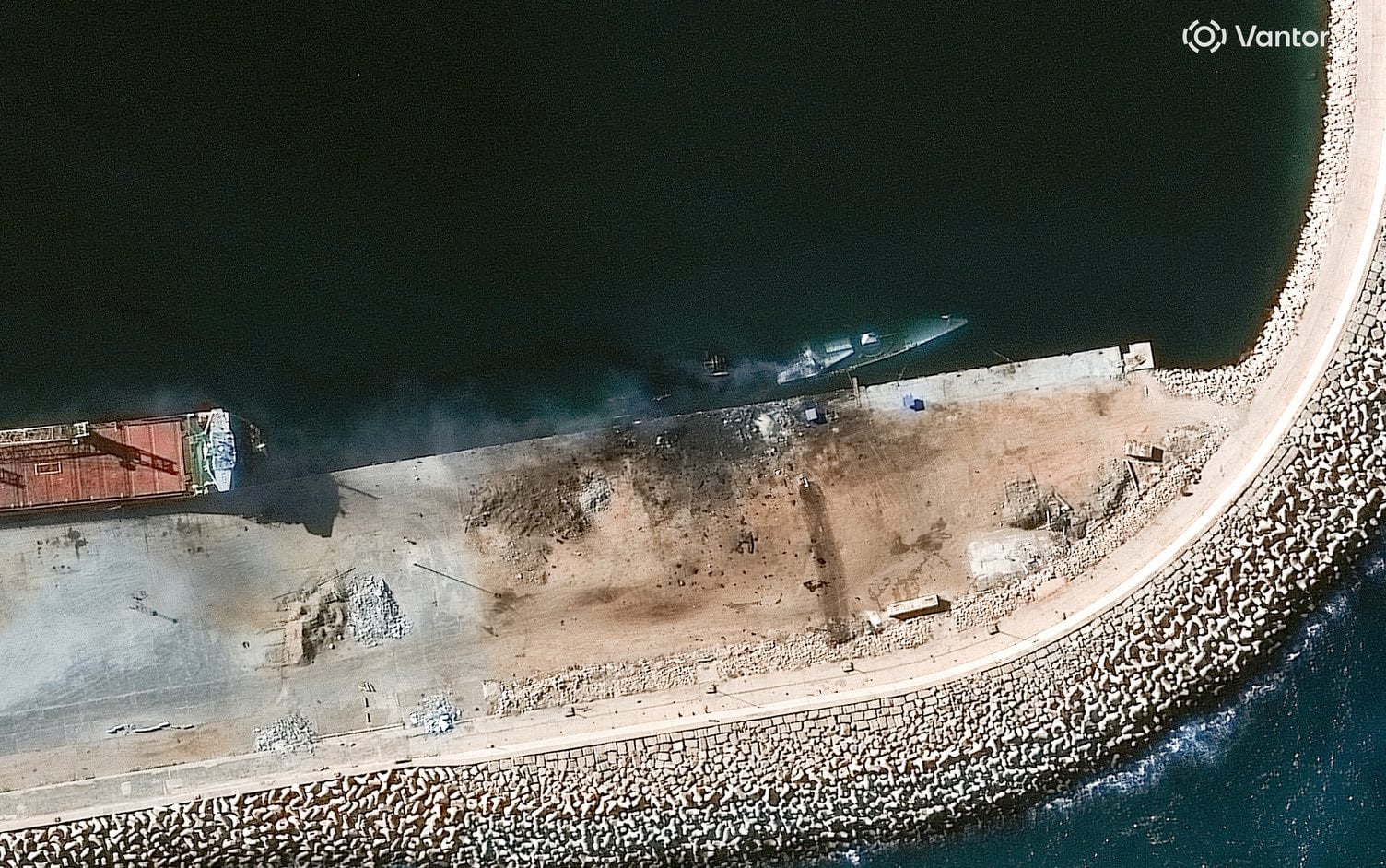
The Russian corvette Merkury was attacked in the Libyan port of Benghazi on Nov. 22. Footage released after the attack shows a powerful explosion followed by a prolonged secondary detonation. It is impossible to determine from the video exactly what exploded: the ship was carrying artillery and anti-aircraft munitions, Kh-35 anti-ship missiles, and torpedoes, although these are stored in different parts of the vessel. Satellite images later showed a large fire and subsequently the capsized and almost completely submerged corvette. The vessel, which entered service in 2023, can therefore be considered lost.
Footage has also emerged of another vessel being struck by unmanned surface vessels off the Libyan coast on the same day. It was initially identified as the cargo ship Ascalon, which in October, along with Lady D and Anastasiia, was loaded with armored vehicles and other military equipment in Baltiysk. There were also reports of an attempted attack on the cargo ship Anastasiia, which was docked in Benghazi, but the maritime drone struck the pier instead. One of the published images shows military-colored vehicles in the ship's open cargo hold, as well as heavy lowboy trailers used to transport armored vehicles on the pier beside it. This further suggests that Anastasiia had delivered military cargo to Libya.

According to assessments by Russian sources, the strikes on Sparta II in the Baltic Sea, Merkury, and cargo ships off Libya were part of a campaign targeting the logistics of Russia's Africa Corps. All of these vessels are part of a maritime transport network linking the Kaliningrad region with Russian forces in Africa. This successful operation deals a significant material and reputational blow to Russia, but it will not have a direct impact on combat operations in Ukraine.
As noted by naval OSINT analyst H. I. Sutton, an image of one of the damaged maritime drones shows distinctive features of the Sargan-3000 family, also known as Sea Wolf and referred to by the Security Service of Ukraine (SBU) as Sea Baby II. Volodymyr Zelenskyy confirmed that the operation was carried out by the SBU in coordination with other units, using seven maritime drones. A Ka-27 helicopter aboard the Merkury was destroyed along with the corvette, while the second target was the cargo ship MV Angara, which was carrying weapons and was also struck.


Polish prosecutors have established that all three objects that fell on Nov. 20 in the Lublin and Subcarpathian voivodeships were Russian Kh-101 cruise missiles. Thus, initial reports of two missiles and one jet-powered UAV were not confirmed. According to specialists' preliminary findings, all three missiles were manufactured in the fourth quarter of 2026 at the Raduga plant in Dubna, in the Moscow region.
The circumstances of the failed interception have also become known. A NATO command center authorized two Swedish JAS 39 Gripen fighters to open fire on condition that the target type was confirmed. However, due to extremely difficult weather conditions, the pilot could not reliably identify the missile either visually or using the onboard electro-optical system and refrained from firing. Dense cloud cover may have hindered target detection, and the decision may also have been influenced by the presence of populated areas along the missile's flight path: an interception under such circumstances would have posed a risk of debris falling onto residential areas. However, these are only assumptions: the Polish military command has not reported on these factors.
The Kh-101 is equipped with inertial and satellite navigation systems, as well as an electro-optical system for terrain image-based course correction. Satellite navigation jamming alone is likely insufficient to explain such a deviation from the intended flight path: the Kh-101 is capable of comparing the terrain it flies over with images stored in its memory. This system does not entirely rule out navigation errors, but we consider it unlikely that all three missiles experienced navigation errors.
The Financial Times reported a sharp rise in the price of Chinese optical fiber used in UAVs. Since the spring, the price of high-quality fiber has increased from around $4 to nearly $30 per kilometer, meaning that a 30-km spool alone can cost about $1,000. The increase is attributed to growing demand from both drone manufacturers and data centers under construction, which, unlike internet service providers, require a specialized bend-insensitive grade of fiber. Russian buyers are in a stronger position thanks to centralized bulk orders and direct agreements with Chinese suppliers, whereas Ukrainian procurement is fragmented among numerous companies and intermediaries. The article's authors believe that rising prices may push Ukrainian manufacturers toward radio-controlled drones or Starlink terminals. In our view, however, the potential impact of rising fiber prices on the course of the war is overstated. Fiber-optic drones account for 10–30 percent of successful strikes. Their use has already been constrained by the difficulty of operating them, the need for additional operator training, the weight of the spool, and the risk of the fiber breaking during maneuvers. Higher prices will therefore be another complicating factor and may slow the further spread of such UAVs, but are unlikely by themselves to fundamentally alter the scale of their use.
We need your support to continue our efforts. Please consider making a monthly donation to CIT through our fundraising page or Patreon.