Sitrep for Nov. 2-5, 2026 (as of 10 a.m. UTC+3)
On Nov. 3, the United States held midterm elections, as a result of which (although vote counting is not yet complete) the Democratic Party is expected to gain control of both chambers of Congress: the House of Representatives and the Senate. However, major changes in US policy toward Ukraine, Russia, and Europe should not be expected, nor is Trump's position on Putin likely to change. The elections are also unlikely to have a significant impact on US military assistance to Ukraine, as Congress has little direct involvement in such matters. Decisions on providing assistance to allies, transferring weapons, sharing or withholding intelligence, and granting access to Starshield / Starlink fall under the authority of the executive branch. Therefore, we do not anticipate any major shifts in US foreign policy, the negotiation process, or immigration policy.

Starting in January, Democrats will be able to launch congressional investigations and subpoena officials to testify under oath, including to publicly document any arrangements between the Trump administration and Putin. However, they will not be able to compel the Department of Justice to file criminal charges. Furthermore, Trump retains the power to veto legislation passed by Congress.
During the remaining two months before the new Congress takes office, Republicans will likely seek to push through any legislative initiatives that could advance Trump's agenda during the remainder of his presidential term. American lawyer Igor Slabykh explained during Evgeny Feldman's election coverage that Republicans are no longer constrained by upcoming elections.
At the same time, Trump himself remains quite unpredictable. In particular, he was fairly restrained in his response to a statement by Vice President Vance, who asserted that the Republican Party lost because of the war in the Middle East and the weak US economy. Trump replied that he would have launched this war anyway to prevent Iran from acquiring nuclear weapons.
Although Trump's powers will remain unchanged, that does not mean the Republicans' defeat will have no effect on him. After his decisive victory in the 2024 presidential election, many wealthy and influential people tried to curry favor with Trump, but now that public opinion has shifted, their support will decline significantly.
In our assessment, when Trump took office and Republicans held majorities in both chambers of Congress, there was an opportunity to halt the war in Ukraine. To that end, Russia needed to make some concessions, but doing so would have kept the war from dragging on for several more years. Halting combat operations and improving relations with the United States would have let Russia accumulate resources to resume the war two to four years later. That would unquestionably have benefited Putin, but he refused to compromise with Trump and continued to pursue his own course. It is entirely possible that his inner circle convinced him that victory was near and that economic conditions allowed Russia to continue the war successfully.
If the next president of the United States is a Democrat, as now seems likely, that could bring stronger support for Ukraine (though still short of the aid provided during Biden's presidency) and make it even harder for Russia to continue the war.
Frontline Situation Update
The independent Finnish group Black Bird Group has published its figures for Russian territorial advances, estimating that the Russian Army captured 21 km² in October. We believe the analysts included all Ukrainian gains from Operation Vivaldi in their September figures, which then showed a net loss of 190 km² for Russian forces. The differences between Black Bird Group’s figures and those of other projects stem from the fact that some analysts included part of the AFU’s advances in their October statistics. Nevertheless, all estimates show that the rate of territorial advance remains close to zero.

Russian sources have published reports about the modernization of Russian helicopters and their armaments to counter Ukrainian drones. In particular, reports mention the use of S-8VTs rockets, a kind of Russian counterpart to APKWS. The S-8VTs is a modified version of the unguided S-8 air-to-surface rocket, which Sukhoi Su-25 Grach (Frogfoot) attack aircraft and Mil Mi-8 helicopters frequently fired using a tossing maneuver at the beginning of the full-scale invasion. The new version of the rocket was designed specifically to intercept UAVs, but its exact design remains unclear to us. Although sources mention a specially developed radar seeker, publicly available infographics show neither aerodynamic control surfaces, such as control fins, nor impulse thrusters for lateral course correction. We also find it difficult to envisage how thrust-vector control could be implemented in a rocket of such a small size. The S-8VTs rockets are mounted in pods containing ten rockets each, which can be attached to Mi-8 transport helicopters and potentially to Kamov Ka-52M attack helicopters. The Ka-52M is not shown in the video, but its potential use is discussed in a presentation by Zaslon JSC. Propaganda reports mention that the Mi-8 provides cover, as it is also equipped with a more powerful radar station and electronic warfare systems. In this way, the helicopters effectively serve as a kind of "flying air defense system." The main questions remain how many of these modified rockets will be manufactured and how many carrier helicopters with trained crews will be available.

There have also been reports of modifications to the 9K121 Vikhr air-launched anti-tank missile, which is also carried by helicopters, for use on the Ka-52M. It is worth recalling that Vikhr missiles were actively used to repel the Ukrainian counteroffensive on the Zaporizhzhia axis in 2023. The nature of the modifications remains unclear as well. The proximity fuze discussed in the video has, in fact, been fitted to these missiles for many years.
Ukrainian and Russian Strikes
On Nov. 2, the Russian Aerospace Forces dropped at least nine air-dropped bombs equipped with Universal Gliding and Correction Modules (UMPK) on the village of Komyshuvakha in the Zaporizhzhia region. The first strikes hit a former school where humanitarian aid was being distributed. After a new air raid warning was issued, police officers helped nearby civilians descend into a shelter set up inside the building. The incident was captured on their body cameras. Shortly afterward, a three-ton glide bomb struck the underground school. The floor slabs collapsed, trapping the people sheltering inside beneath the rubble. As of the evening of Nov. 5, 43 people were reported killed, including four police officers and two first responders. At least five people were injured. Another 33 people may still be trapped beneath the rubble, and search operations are ongoing.
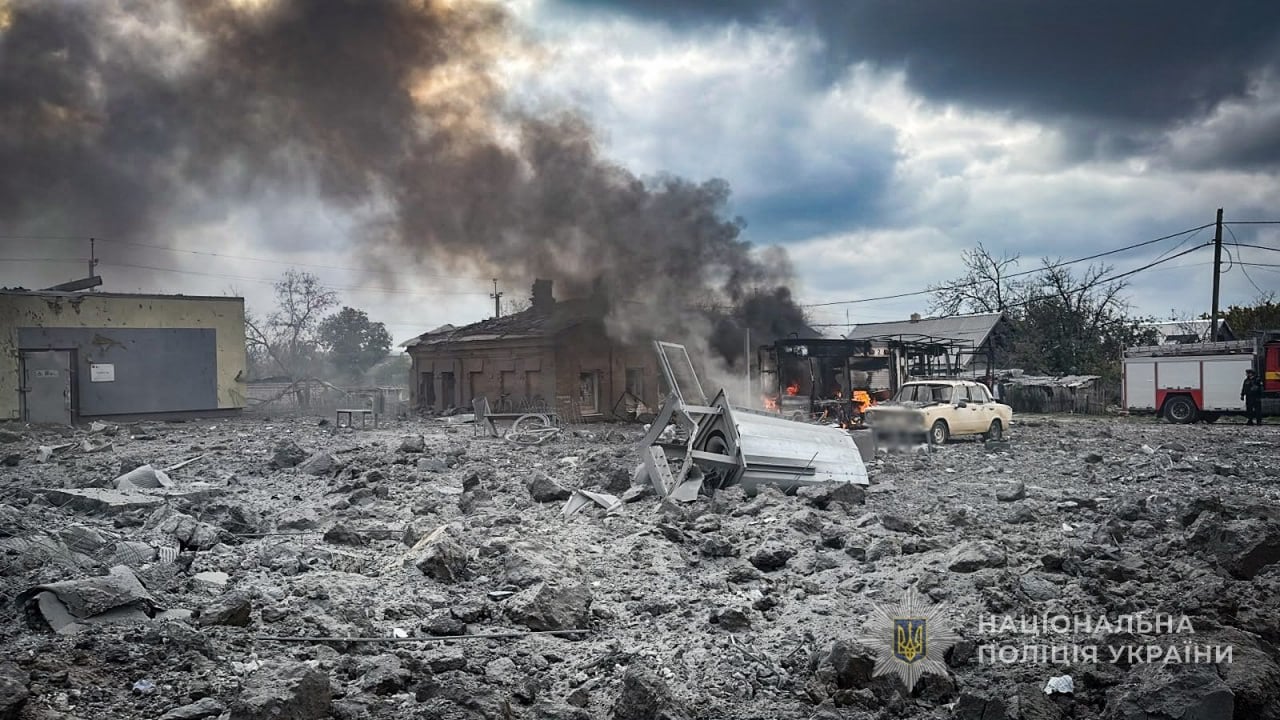
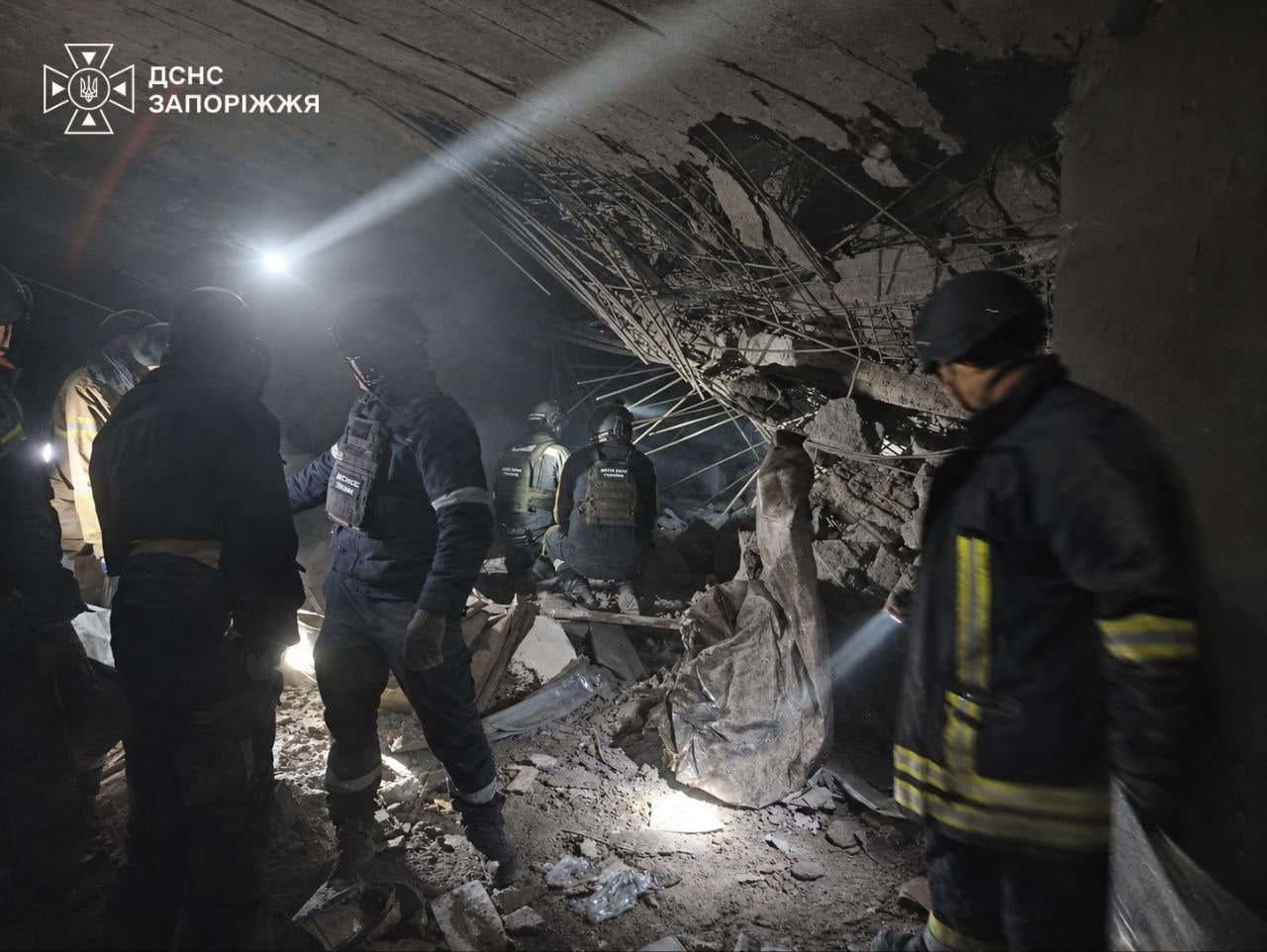
Previously, on June 15, a Russian FPV drone had already attacked the humanitarian aid distribution point at this location, so the Russian side should have been aware that civilians were present. Pro-Russian channels are circulating a September statement by Roman Piatigorets, a Zaporizhzhia political analyst and volunteer, claiming that Ukrainian UAV operators were stationed in the underground school in Komyshuvakha, and that all underground schools are dual-use facilities. However, no military personnel are visible in the published photographs or videos, and Piatigorets provides no evidence to support his claim. In February 2026, it was reported that classes at the school had been suspended due to regular airstrikes. However, all local government offices had been relocated to the underground premises, where humanitarian aid was distributed and residents whose homes had been destroyed could temporarily stay. The possible use of such facilities by the AFU (there were 13 underground schools in the Zaporizhzhia region alone a year ago) does not in itself prove that Ukrainian drone operators were present at this particular school at the time. Even if they had been, any military advantage from such a strike could not begin to outweigh the collateral damage. Thus, the strike on Komyshuvakha constitutes yet another war crime committed by the Russian Armed Forces.
As in the case of the strike on a funeral service in the village of Hroza in the Kharkiv region in October 2023, the Russian side may have failed to conduct additional reconnaissance of the target after receiving information that Ukrainian troops were stationed there. Alternatively, this may simply be a continuation of Russia’s tactic of destroying any buildings near the frontline that could be used by the AFU.
According to CIT volunteers’ tally, at least 550 civilians were killed and another 3,335 injured in strikes on civilian infrastructure on both sides of the frontline in October. The death toll rose significantly compared with September, when 468 people were killed and 3,364 injured, and approached the levels recorded during the summer. In August, 562 people were killed and 4,169 injured, while July remains the deadliest month, with 634 killed and 4,590 injured. Once again, the overwhelming majority of casualties occurred in Ukrainian government-controlled territory: 70 percent of those killed and nearly 75 percent of those injured were recorded there. Thus, Russian strikes continue to cause significantly more civilian casualties than Ukrainian attacks on occupied territories and Russia.

The RuAF continue to strike Ukraine’s energy infrastructure, including with ballistic missiles. Russia’s Ministry of Defense reported hitting several thermal power plants and substations, while Ukrenergo described the Nov. 3 attack as one of the largest attacks in recent months. As a result, three thermal power plants halted electricity generation, and Kyiv experienced disruptions to its electricity and water supplies. Water service was restored later. Energy company DTEK published footage showing the damage at one of the thermal power plants.

Serhii Sternenko claims that some energy facilities in the Kyiv region did not receive the planned protection, or the work was carried out improperly. We treat such claims with caution, including in the context of the political confrontation between Kyiv Mayor Vitalii Klytschko and President Volodymyr Zelenskyy. For now, above-freezing temperatures are helping to mitigate the impact of the attacks. However, as colder weather sets in, the strain on the damaged power grid will increase.
In response, the AFU continues to strike energy infrastructure in annexed Crimea. In the early hours of Nov. 3, widespread power outages were reported across the peninsula. Local energy companies announced emergency restrictions on electricity supply, while in the city of Kerch, electricity was expected to be available for only four hours a day.
Conscription, Mobilization and Contract Military Service
Previously, we reported on reviews posted on the 2GIS page for the Sirius-55 recruitment center in Omsk: relatives claimed that men were being taken off the streets, beaten, and coerced into signing contracts. Following media posts, most of these messages were deleted or moved to the unverified reviews section.
The case of 42-year-old Ivan Isaikhin is very similar to these stories. According to the Astra Telegram channel, on July 10, he was detained under the pretext of an alimony debt and, instead of being taken to the court bailiffs' office, was brought to Sirius-55, where, according to his mother, he was assaulted until he lost consciousness and forced to sign a contract with the MoD. Medical documents confirm that after this, Isaikhin spent about a month and a half in military hospitals with a traumatic brain injury, a contusion, a cerebral hemorrhage, fractured ribs, and other injuries. Despite his severe injuries and the medical leave he had been granted, he was sent to the frontline. Since Oct. 18, he has been listed as missing in action: contact with him was lost during a combat mission in the area of the village of Sofiivka in the Druzhkivka direction. This case illustrates how socially vulnerable people are coerced into signing military contracts.

The situation in the village of Petropavlivska Borshchahivka near Kyiv raises questions. A private house there was allegedly used as a "prison" where about 40 draftees and soldiers who had gone AWOL were illegally held and tortured. According to Radio Free Europe/Radio Liberty, the building served as a temporary assembly point for National Guard Military Unit 3121. Eighteen people were there awaiting paperwork and assignment to training centers, including four who had been detained after going AWOL. Those who were allowed to inspect the premises found no bodies or signs of torture. The military ombudsman's office has launched an inquiry into possible violations of the rights of those held there, and Ukraine's State Bureau of Investigation has opened a case over possible abuse of authority by servicemembers.
The picture is unclear, and it is hard to sort out contradictory and sometimes politically motivated reports. Still, such temporary sites seem plausible to us. Commanders may try to bring back soldiers who have gone AWOL without officially recording them as deserters, to avoid worsening their units' statistics, and a similar practice has long existed in the Russian army. The incident again highlights Ukraine's ongoing problems with mobilization, AWOL cases and violence, but it is worth waiting for the results of the official investigations before drawing final conclusions.
In an attempt to create its own version of USAID, the Russian government has submitted a bill to the State Duma [lower house of the Federal Assembly of Russia] that would allow Rossotrudnichestvo [the Federal Agency for the Commonwealth of Independent States Affairs, Compatriots Living Abroad, and International Humanitarian Cooperation] to fund foreign organizations to promote Russian influence. The stated goals of this initiative include "strengthening Russia’s position as an influential center" and "shaping an objective perception" of the country. In the United States, USAID was also viewed as an instrument of "soft power." However, its influence was primarily built through tangible assistance in the form of educational, medical, humanitarian and infrastructure projects. This approach fosters goodwill toward the donor country through the results of such projects, rather than requiring grant recipients to publicly praise the US Government. If Russia’s counterpart focuses on propaganda, as its stated goals suggest, it is unlikely to become an effective "soft power" tool. Without tangible benefits for local people, this initiative risks becoming a costly effort to buy loyalty and a source of corruption.
We need your support to continue our efforts. Please consider making a monthly donation to CIT through our fundraising page or Patreon.