Sitrep for Nov. 9-16, 2026 (as of 8 a.m. UTC+3)
Frontline Situation Update
The frontline remains relatively quiet, with fewer clashes than in the second half of the summer and early fall. Meanwhile, reports emerged last week of a Russian mechanized assault in the Donetsk region, in the Dobropillia direction. The attack was made possible by foggy weather, which hampered drone reconnaissance and made it harder to detect enemy movements. According to French researcher Clément Molin, on the morning of Nov. 13, Russian forces made several attempts to advance under the cover of fog, using armored vehicles and motorcycles, including toward the town of Druzhkivka. Researcher Playfra reported that two infantry fighting vehicles, a tank, and other vehicles moved out from the village of Shakhove toward the village of Hruzke. Although they managed to approach and dismount their infantry, the vehicles were hit, and most of the soldiers were also struck. Attempts to advance toward the village of Rusyn Yar were also reported. As usual, both sides are using the fog as cover to rotate troops, bring in supplies, and evacuate the wounded.


The Russian offensive in the Donetsk region has slowed considerably in recent weeks. We believe one of the reasons for this was the failed attempt to break through toward Druzhkivka. In the summer, the RuAF tried to cut off Ukrainian supply routes into Kostiantynivka, which would have allowed them to push Ukrainian troops out of the town more quickly. Although they achieved a local breakthrough, Russian forces were unable to capitalize on it. They failed to achieve their objective, and Kostiantynivka remains in the contested zone. We previously considered it possible that by the end of the year, the boundaries of the contested area could reach the outskirts of Sloviansk and Kramatorsk. That prospect has now receded. This is due not only to the Russian military's unsuccessful operations, but also to changes in the command of the Ukrainian grouping in these directions, successful middle-strike operations targeting Russian logistics, and the introduction of whitelists for Starlink terminals.
Meanwhile, according to the Ukrainian Telegram channel Officer, Russian troops reportedly have access to a growing number of Starlink terminals. This has enabled them to deploy the terminals at drone operator positions and command posts, and even use them during assault operations by mounting them on ATVs to maintain communications with other assault groups. Following the introduction of whitelists for Starlink terminals, the RuAF launched an active campaign to recruit Ukrainians willing, for various reasons, to cooperate and register satellite terminals on behalf of enemy troops. It is entirely possible that the number of such terminals has recently increased. However, it is also plausible that the increase is limited to a particular sector of the frontline. In the latter case, reports of a growing number of terminals could create a misleading impression of the overall scale of the problem.
Another significant issue related to satellite communications is the new restrictions imposed on Starshield, the military version of Starlink, in Ukraine. The maximum speed at which Starshield terminals can operate has reportedly been limited in occupied Ukrainian territory and near the frontline. One possible explanation is the US side's reluctance to allow the AFU to use Starlink for offensive operations, a concern previously voiced by Elon Musk. Another possibility is that the restrictions were intended to exert pressure on Ukraine amid the negotiations in Abu Dhabi. At the same time, SpaceX told Ukrainian officials that no restrictions had been imposed and that the problems were caused by technical malfunctions. This explanation is questionable for two reasons: technical issues are normally resolved within hours rather than persisting for several days, and responsibility for Starshield operations primarily rests with the Pentagon rather than SpaceX.
In addition, Democratic senators have sent a letter to SpaceX demanding that the company preserve all documentation concerning satellite communications outages in Ukraine during the period from Oct. 13 to Oct. 24, as well as from Nov. 12 onward. The request is part of preparations for future congressional investigations, during which those involved could be subpoenaed to testify under oath as early as January.
Ukrainian and Russian Strikes
Over the past week, Russia launched significantly fewer missiles at Ukraine than usual. According to Volodymyr Zelenskyy, just 15 were launched, compared with 115 the previous week. During the current fall campaign, Russia typically launches between 40-60 and more than 100 missiles per week, carrying out one or two large-scale attacks. There were no such attacks last week. This lull may be linked to the negotiations in Abu Dhabi. Russia may have temporarily scaled back its strikes to signal to the United States that it is willing to make concessions. Another possible explanation is that Russia is stockpiling missiles for its next large-scale attack.
The negotiations themselves still offer little reason for optimism, as the parties' positions on key issues remain incompatible. However, one tangible outcome could be the largest prisoner-of-war exchange of the war so far, which Zelenskyy said could take place in the near future following discussions in Abu Dhabi.
Russian forces continue to strike Ukrainian bridges. In addition to Kyiv, they have targeted, among other sites, the dam of the Dnipro Hydroelectric Station in the city of Zaporizhzhia, as well as the cable-stayed bridge and the Preobrazhenskyi Bridge, causing temporary traffic restrictions. As a result, traffic along the road running across the dam was temporarily suspended. It was soon restored, with one lane open in each direction. As we have noted repeatedly, dams are generally massive, sturdy structures that are difficult to destroy even with ballistic missiles. The roads running along the top of dams, by contrast, are much easier to damage, potentially disrupting transport links between the two banks.
Towards the end of the week, drones attacked four commercial vessels in Romania's territorial waters. On the evening of Nov. 13, the Palau-flagged cargo ship Larissa 1, which was heading to Ukraine, was hit and damaged. The following evening, three more vessels were attacked: the Greek-flagged tanker Evia Petrol V, the bulk carrier Marsol, and the tanker Ali Najafov, all of which were bound for Moldova. No casualties were reported. The Romanian Air Force scrambled F-16 fighter jets twice during the attacks, but was unable to prevent the vessels from being hit.

A coastal state's sovereignty extends to its territorial waters. An attack on a vessel in Romanian territorial waters is therefore comparable to an attack on a vehicle on Romanian soil. Moreover, Evia Petrol V was sailing under the Greek flag, making it a vessel registered in another NATO member state. Meanwhile, the Romanian authorities have not yet officially established the origin of the drones or explicitly stated that they were launched by Russia. So far, all attempts to reach an agreement on ensuring the safety of commercial shipping in the Black Sea have come to nothing.
In Taganrog on Nov. 15, UAVs struck two power substations, including T-10, which supplies electricity to the city and the Tagmet plant. The strike killed the substation's chief engineer and injured five other people. Tagmet operates mainly in metallurgy and mining and is likely linked to the military-industrial complex. Energy infrastructure is presumed to be civilian, but a substation can become a military target if, at the time, it makes an effective contribution to military action and destroying or disabling it offers a definite military advantage. The mere fact that the substation powers a plant linked to the defense industry is not enough to make it a military target. Those planning an attack must assess the plant's actual role, the expected effect of cutting off its power, how long the plant might remain out of operation, and the consequences for the civilian population. International humanitarian law prohibits attacks in which the expected harm to civilians is excessive in relation to the concrete and direct military advantage anticipated. We therefore regard the strike on the substation as a war crime.
The same logic applies to Russian strikes. Russia's MoD claimed that the substations in Shostka and in the village of Voronezh in the Sumy region, which were attacked on Nov. 13, supplied power to factories that produced UAVs and components, as well as to military depots.
Still, an international court is unlikely ever to convict those responsible for ordering such strikes. The case of Admiral Karl Dönitz is telling: the Nuremberg tribunal found Germany's conduct of unrestricted submarine warfare unlawful, yet the tribunal did not take this into account when determining his sentence, since the Allies, particularly the United States in the Pacific, had engaged in similar practices. Dönitz was convicted on other counts and sentenced to 10 years in prison, but received no punishment specifically for violations of the rules of submarine warfare.
On Nov. 15, Ukrainian forces attacked the Melentyevsky Bridge over the Mius River. In total, six bridges in the Rostov region and in the occupied territories have been struck over the past month. They are located along routes connected to the R-280 Novorossiya highway, which runs through the occupied south of Ukraine and forms part of the land bridge to Crimea used to supply Russian forces.

In the spring and summer, Ukraine's "middle-strike" campaign primarily targeted Russian logistics infrastructure in the occupied territories, including sections of this highway in the Kherson, Zaporizhzhia, and Donetsk regions. The attacks now appear to be shifting farther east, toward bridges in the Rostov region that lead to the same logistics corridor. This may be because Russian forces have already established temporary crossings and alternative routes to replace infrastructure previously put out of action.
In the early hours of Nov. 16, Ukrainian drones struck the Crimean Bridge. One fell onto the roadway, while another hit one of the arches; the extent of the damage is not yet known. The bridge was temporarily closed, but traffic resumed in the evening, with vehicles allowed through in alternating directions.
During strikes on Kursk on Nov. 15, private houses near a combined heat and power plant (CHP) were damaged. The plant supplies heating and hot water to more than 150,000 residents. It is unknown whether the CHP plant itself was the target of the attack. If the target was instead a military objective, and the residential buildings were damaged by falling debris after an interception, such damage in itself does not constitute evidence of a violation of international humanitarian law. In such circumstances, civilian deaths or injuries would likely be considered accidental.
On Nov. 15, the Akhtubinsk military airfield in the Astrakhan region was attacked. Video footage released after the attack shows numerous burning objects scattering through the air, resembling missiles or their engines. According to reports, a storage facility for air-launched missiles was hit, and components of the airfield’s landing beacon system, including a mobile radio altimeter unit, were damaged.

The Ukrainian Telegram channel Soniashnyk noted that claims that the airfield had been "destroyed" greatly exaggerate the consequences of the attack. Damage to the landing beacon and radio altimeter may have complicated aircraft approaches from one direction, particularly at night or in poor visibility. However, the airfield has not lost its ability to receive aircraft.
Western Assistance
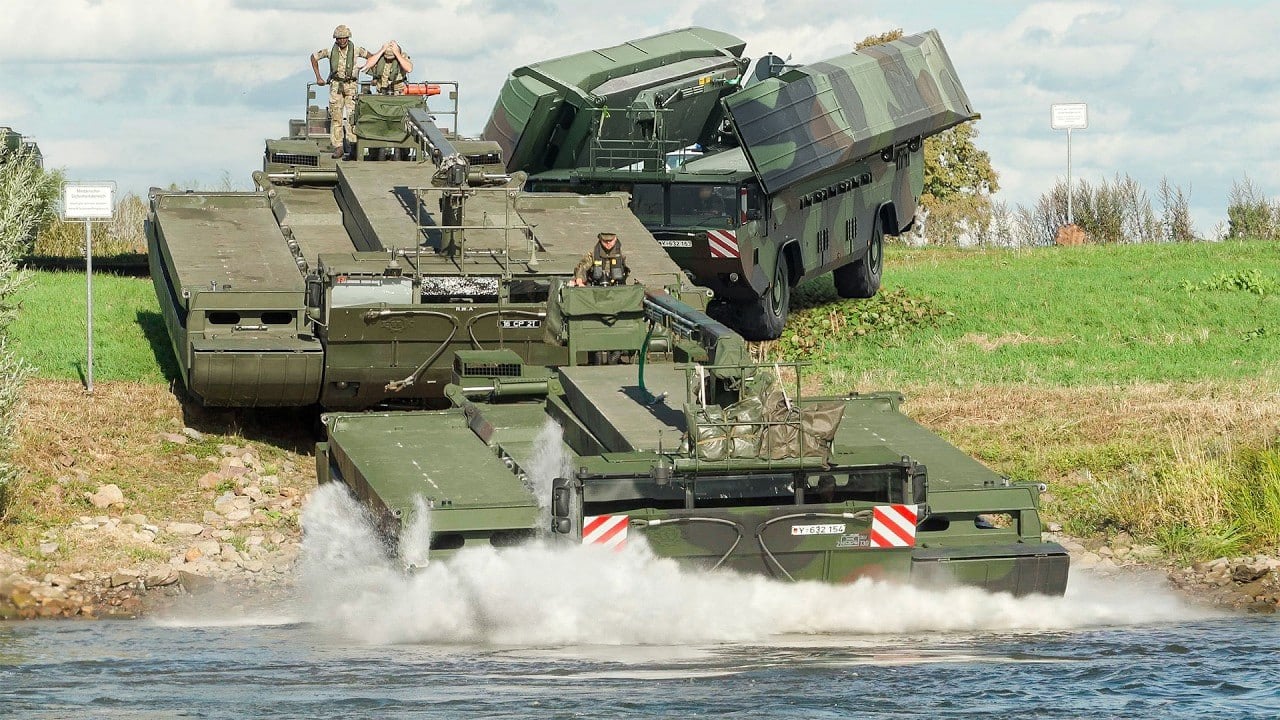
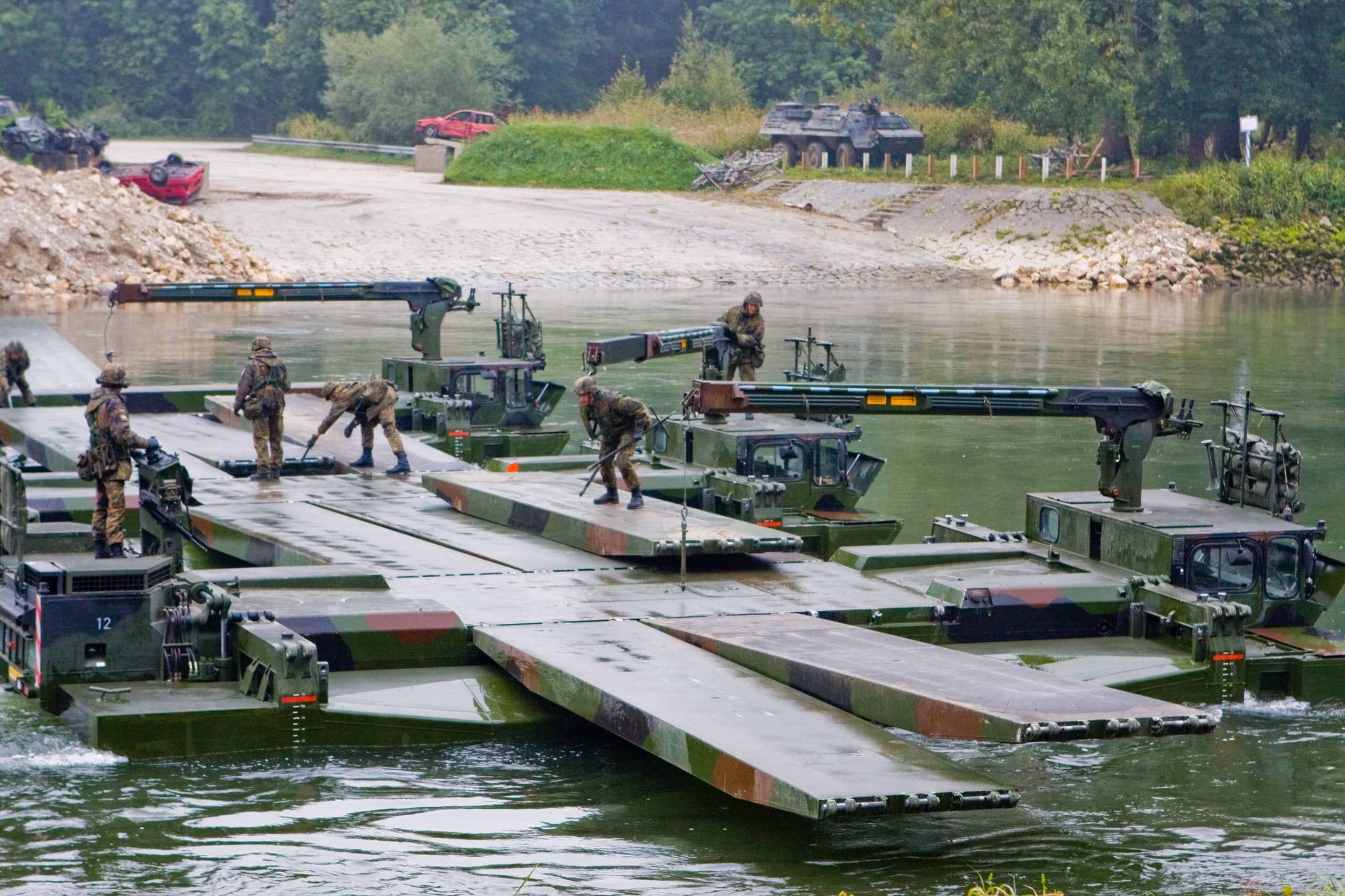
Last week, it was reported that Norway would provide Ukraine with four floating bridges. The wording does not make clear whether this refers to four complete bridge systems or just four vehicles belonging to a single system. The equipment is believed to comprise M3 amphibious bridging vehicles, which can be used to establish pontoon crossings over major rivers—a capability that is particularly relevant given Russian strikes on bridges across the Dnipro.
It is also reported that Ukraine will receive 200 buses and 500 generators from the European Union. Such deliveries are important, as we have been emphasizing almost since the start of the full-scale invasion. Generators, in particular, are of critical importance ahead of winter, as Russian forces continue attempts to destroy Ukraine's power grid.
According to Lockheed Martin Chief Operating Officer Frank St. John, in recent months the company has been producing about 80 PAC-3 MSE missiles for the Patriot system per month, or about 1,000 missiles annually, with plans to increase production to 2,000 per year. Thus, if Ukraine, as Zelenskyy said in October, is still receiving 12 PAC-3 missiles per month, this accounts for a small fraction of total production. It is worth emphasizing that the US sells these missiles to Ukraine rather than providing them free of charge. These deliveries may currently be coming from existing stockpiles, as Lockheed Martin has a backlog of orders worth nearly $300 billion, of which $53 billion is tied to the production of PAC-3 MSE surface-to-air missiles. Even with the planned growth in interceptor missile output, the company will be fulfilling these orders for many years to come.
The Bundestag's Budget Committee approved the draft 2027 federal budget on Nov. 13. The Defense Ministry's budget will total €109.75 billion, supplemented by €29.65 billion from the Bundeswehr special fund—bringing combined military allocations to approximately €139.4 billion, or roughly $154 billion at current exchange rates. This represents an increase of about €35 billion over 2026 levels. The draft budget still requires final approval by the full Bundestag. Overall, the German federal budget earmarks €11.6 billion—nearly $13 billion—in military and financial aid for Ukraine.
On Nov. 13, the Bundestag approved legislation reforming Germany's intelligence services, expanding the powers of the Federal Intelligence Service (BND) and the Federal Office for the Protection of the Constitution (BfV). Under strict statutory conditions, intelligence services will now be authorized to covertly enter premises, infiltrate information systems, install surveillance equipment, and carry out cyberattacks. German authorities justify the reforms by citing growing threats of espionage, sabotage, terrorism, and state-sponsored cyberattacks—marking another sign of the intensifying confrontation between Russia and Iran on one side, and European nations on the other.
We need your support to continue our efforts. Please consider making a monthly donation to CIT through our fundraising page or Patreon.